Trusting the Unfolding of Movement
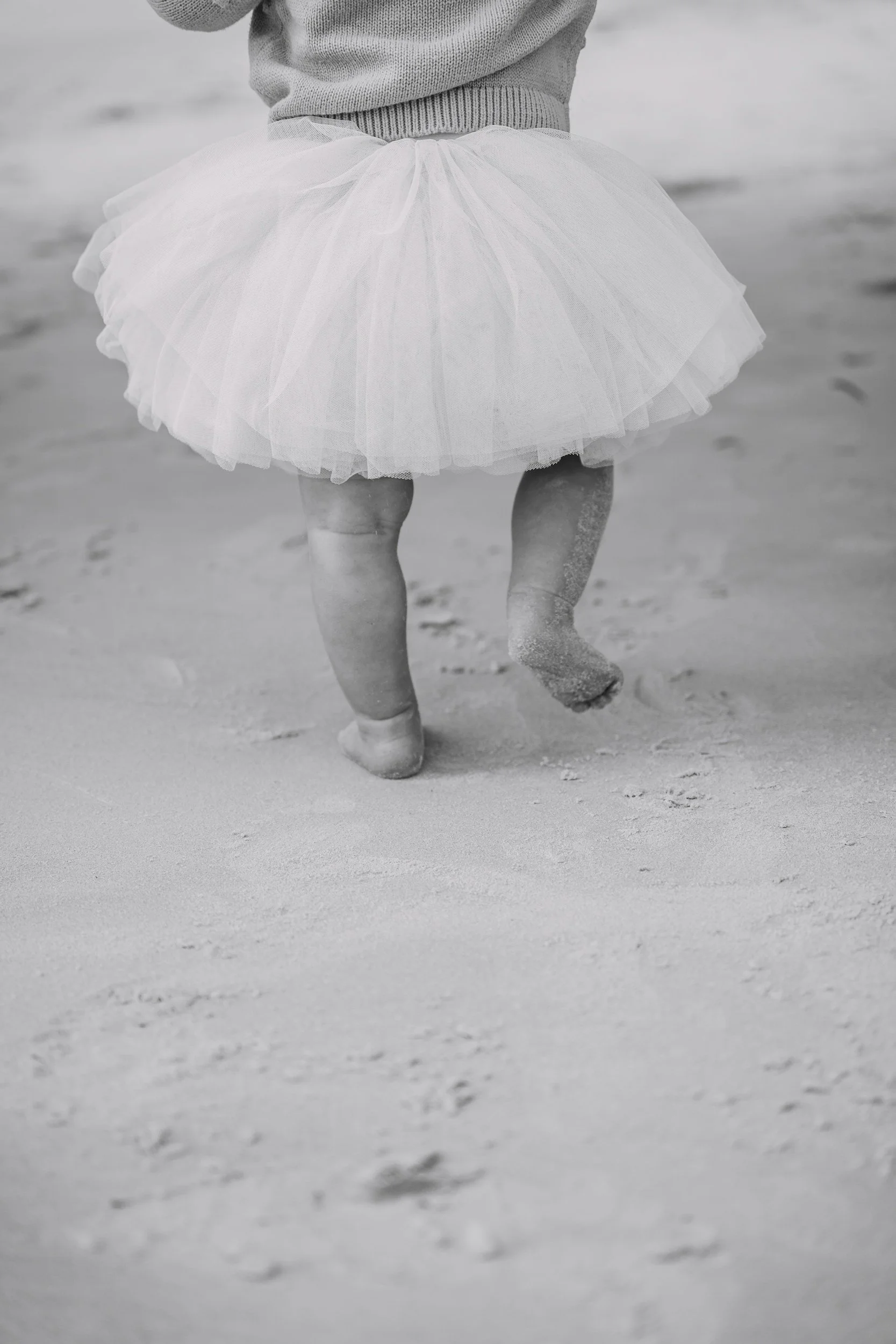
There is a quiet wisdom in the way a child comes into their body. When I pause long enough to truly observe, I see that nothing is rushed, nothing is accidental. Each small movement—lifting the head, discovering the hands, rolling, pushing, crawling—is part of a deeply intelligent process that cannot be hurried without consequence.
In our culture, there is so much emphasis on milestones. Walking becomes something to “achieve,” something we gently (or not so gently) encourage along. But what if walking is not a goal to reach, but a culmination of everything that came before? A natural flowering of balance, strength, coordination, and inner will?
In the teachings of Magda Gerber, there is a clear invitation: trust the child. She reminds us that children learn best when they are given uninterrupted time and space to move freely, to initiate their own activity, and to discover their bodies without interference. Holding a child’s hands to help them walk, or placing them in devices that simulate upright positions, can create a false sense of balance. It bypasses the essential work the child must do on their own—developing equilibrium, coordination, and confidence from within.
Joan Salter expands on this by emphasizing observation and respect. When we observe without rushing to assist, we begin to see the child’s effort, their problem-solving, their persistence. We see that what may look like struggle is actually meaningful work. It is through this process that the child gathers the will forces necessary to take that first step independently.
From a Waldorf perspective, this unfolding of movement is deeply connected to the child’s integration into their physical body. In the first seven years, the child is engaged in the profound task of incarnation—of truly inhabiting their body. Movement is not separate from this; it is the pathway through which the child comes to know themselves. Each stage builds upon the last, creating a strong foundation for both physical and emotional development.
When I think about how to support this process, the answer feels simple, though not always easy: create space, and then step back.
A safe, open area on the floor becomes the child’s world—a place where they can move freely, roll, pivot, push, and explore without constraint. Beginning as early as six weeks, placing a baby on their back on a firm, comfortable surface offers them the opportunity to initiate movement. Over time, this uninterrupted free play becomes the ground from which all later skills emerge.
There is also something to be said about what we don’t use. Walkers, bouncy seats, and molded chairs may seem helpful, but they often limit a child’s natural movement patterns and provide support that the child has not yet developed internally. When we remove these contraptions, we give the child the gift of true experience—of feeling their weight, their balance, their effort.
The moment of walking, then, is no longer something we orchestrate. It becomes something we witness. The child pulls to stand, cruises, experiments, falls, tries again. And one day, when they have gathered enough strength, balance, and courage, they let go and take a step. Not because we guided them there, but because they were ready.
This requires faith.
Faith that development is not something we need to control. Faith that when we provide the right conditions—time, space, safety, and presence—the child will unfold exactly as they are meant to.
And perhaps most importantly, it requires a shift in how we see our role. We are not the ones who teach the child to walk. We are the ones who protect the space in which walking becomes possible.
Resources & Citations:
Magda Gerber, Your Self-Confident Baby: How to Encourage Your Child’s Natural Abilities — From the Very Start (2002)
Joan Salter, RIE Associate writings and lectures on observation and respectful caregiving
Emmi Pikler, Peaceful Babies, Contented Mothers (original research on free movement and motor development)
Kim John Payne, Simplicity Parenting (for creating supportive home environments)
Rudolf Steiner, The Education of the Child in Light of Anthroposophy (1909)
There is a quiet courage in waiting, and a deep respect in trusting.